
Tapering Off Trazodone: Managing Insomnia Rebound in Long-Term Users
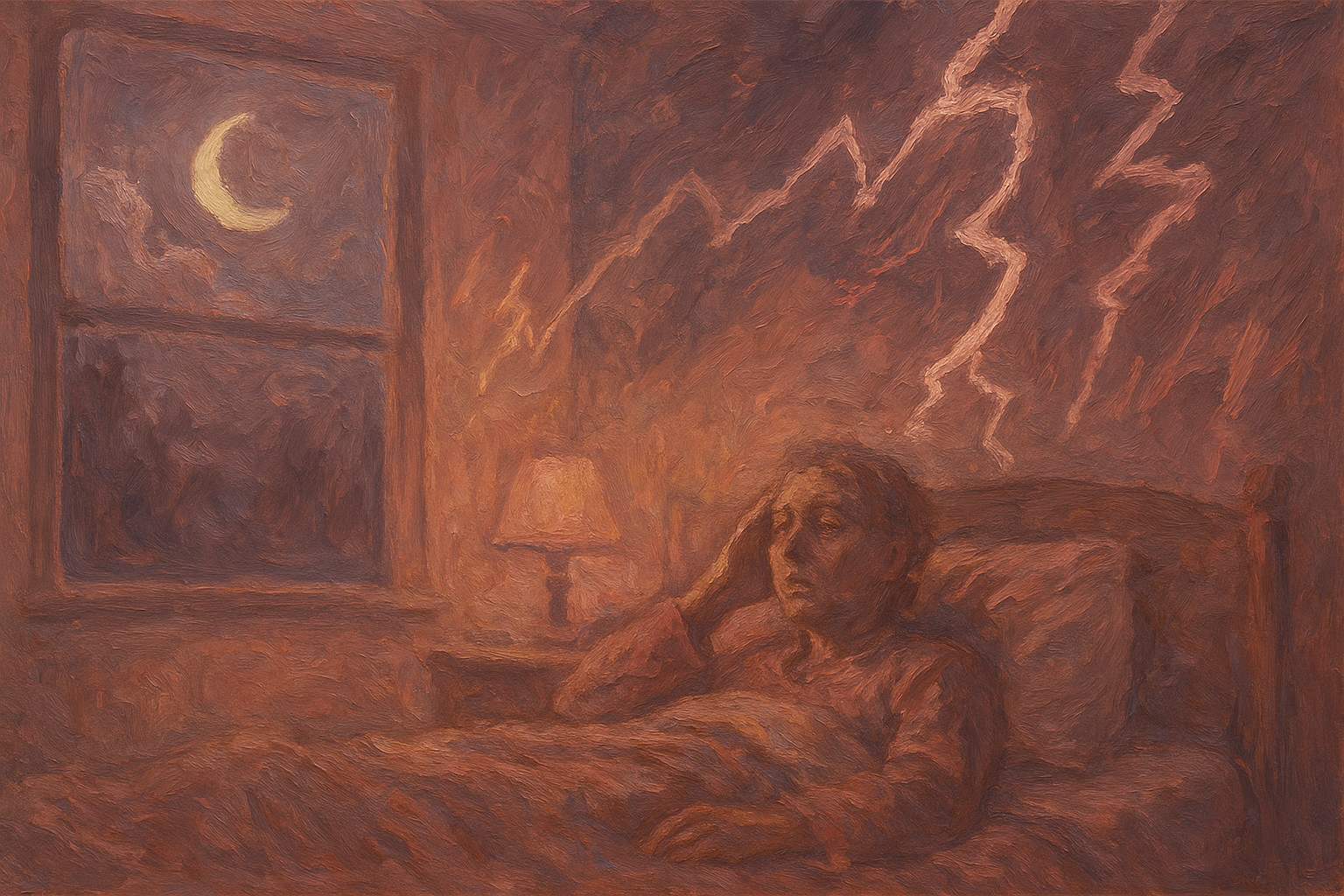
Trazodone is one of the most widely prescribed off-label hypnotics in primary care and psychiatry, typically at 25–100 mg nightly, despite an FDA indication only for major depressive disorder at 150–600 mg/day. Discontinuation in long-term low-dose users is dominated by rebound insomnia rather than a classic somatic discontinuation syndrome, and the rebound is frequently misread as recurrence of the original sleep disorder. This post covers the pharmacology that drives that rebound, a mg-level deprescribing schedule, and the differential that separates true insomnia recurrence from a transient pharmacodynamic rebound.
Why trazodone is used for sleep, and why that matters for tapering
Trazodone's hypnotic effect is a low-dose phenomenon driven by receptor antagonism, not by its serotonin reuptake inhibition. At 25–100 mg, the dominant pharmacology is potent antagonism at histamine H1, 5-HT2A, and alpha-1 adrenergic receptors. The 5-HT2A blockade in particular increases slow-wave sleep and reduces nocturnal awakenings without the REM suppression seen with most antidepressants. Serotonin reuptake inhibition — the mechanism relevant to the antidepressant indication — only becomes pharmacologically meaningful at 150 mg and above, where the drug behaves as a serotonin antagonist and reuptake inhibitor (SARI).
This matters for tapering because the receptors mediating sedation are precisely the ones that upregulate during chronic exposure. When trazodone is withdrawn, H1 and 5-HT2A signaling rebounds above baseline, producing a transient period of worse sleep than the patient had before any drug exposure. Distinguishing that pharmacodynamic rebound from the underlying insomnia is the central clinical task.
Pharmacokinetics that shape the taper
Trazodone has a short, biphasic half-life: an initial distribution phase of roughly 3–6 hours and a terminal elimination half-life of approximately 5–9 hours in most adults, somewhat longer in older patients and those with hepatic impairment. The short half-life is why a single bedtime dose works for sleep without daytime carryover at low doses — and why missed doses or abrupt cessation produce a same-night rebound rather than a delayed one.
The clinically important wrinkle is the active metabolite meta-chlorophenylpiperazine (m-CPP), formed primarily by CYP3A4. m-CPP is a serotonergic agonist with a longer half-life than the parent compound (roughly 4–14 hours) and is associated with anxiety, dysphoria, and migraine-like symptoms when it accumulates. Two consequences for the prescriber:
- CYP interactions matter during taper. A CYP3A4 inhibitor (e.g., ketoconazole, ritonavir, clarithromycin, grapefruit) raises trazodone levels and shifts the parent-to-metabolite ratio; a CYP2D6 poor-metabolizer phenotype slows m-CPP clearance. Patients on interacting drugs can experience disproportionate symptoms from small dose changes.
- Fast metabolizers feel rebound sooner. Because both parent and metabolite clear quickly, there is no self-tapering "tail." Unlike fluoxetine, trazodone provides no pharmacokinetic cushion, so the taper schedule must supply what the drug's half-life does not.
Formulations available for tapering
| Formulation | Strengths | Tapering utility | ||---| | Immediate-release tablet (scored) | 50, 100, 150, 300 mg | Workhorse for taper; 50 mg and 100 mg tablets are bisectable to 25 mg and 50 mg | | Extended-release (Oleptro) | 150, 300 mg | Largely discontinued in the US; not bisectable — avoid for fine titration | | Compounded oral suspension | Pharmacy-dependent (e.g., 10 mg/mL) | Enables sub-25 mg decrements when tablet splitting bottoms out |
The 50 mg scored tablet is the practical floor for tablet-based tapering, yielding a 25 mg minimum increment. Below that, a compounded suspension or a pill cutter producing quarter-tablets (~12.5 mg) is required for the hyperbolic tail.
The rebound insomnia profile
Rebound insomnia after trazodone discontinuation typically begins on the first or second drug-free night, consistent with the short half-life, and is most intense in the first 3–7 nights. In long-term users (continuous use beyond 6–12 months), the rebound can persist in attenuated form for 2–4 weeks. The characteristic features:
- Sleep-onset and sleep-maintenance worsening that exceeds the pre-treatment baseline — the signature of rebound rather than recurrence.
- Vivid or unpleasant dreaming as 5-HT2A antagonism is withdrawn and REM rebounds.
- Transient daytime anxiety or irritability, partly attributable to unopposed m-CPP-type serotonergic tone in the days after the parent drug clears.
- No classic SSRI/SNRI discontinuation cluster (the "brain zaps," dizziness, and FINISH-syndrome features) at hypnotic doses, because reuptake inhibition is minimal below 150 mg. Patients tapered from antidepressant-range doses (150–600 mg) can, however, show a more SSRI-like discontinuation picture layered on top of the rebound.
Relapse vs. rebound vs. emergent disorder
| Feature | Rebound insomnia | Recurrent insomnia disorder | Emergent condition |
|---|---|---|---|
| Onset after last dose | Nights 1–3 | Days to weeks | Variable |
| Severity vs. baseline | Worse than pre-treatment | Returns to pre-treatment | New symptom pattern |
| Trajectory | Improves over 2–4 weeks | Stable/persistent | Progressive |
| Response to slowing taper | Resolves | Unchanged | Unchanged |
The single most useful diagnostic maneuver is time: rebound improves over weeks without reinstating the drug, whereas a genuine recurrent insomnia disorder does not. Reinstating at the first bad night converts a self-limited rebound into perceived drug dependence and prevents the prescriber from ever distinguishing the two.
A mg-level deprescribing schedule
The governing principle, consistent with the hyperbolic-tapering framework articulated by Horowitz and Taylor and adopted in the Maudsley Deprescribing Guidelines, is proportional (percentage-based) reductions of the current dose, not fixed-mg steps, with smaller absolute decrements as the dose falls. Receptor occupancy is a hyperbolic function of dose, so a 25 mg cut from 50 mg removes far more receptor blockade than a 25 mg cut from 200 mg.
Low-dose hypnotic users (≤100 mg, the common case)
For a patient on 50–100 mg nightly for insomnia, a 2–4 week step interval is usually sufficient because there is no antidepressant-range serotonergic adaptation to unwind:
| Step | Dose | Hold before next cut |
|---|---|---|
| Start | 100 mg | — |
| 1 | 75 mg | 2 weeks |
| 2 | 50 mg | 2 weeks |
| 3 | 37.5 mg | 2–3 weeks |
| 4 | 25 mg | 2–3 weeks |
| 5 | 12.5 mg | 2–3 weeks |
| 6 | Stop | — |
Each step is roughly a 25–33% reduction of the current dose. Patients who report a rough patch at any step should hold at the current dose until sleep restabilizes (usually 1–2 weeks) before the next reduction, rather than reverting upward.
Antidepressant-range users (150–600 mg)
For patients on 150 mg or more — where reuptake inhibition is engaged — slow to roughly 10% of the current dose every 2–4 weeks once below 150 mg, mirroring the SSRI/SNRI approach, and consider a longer interval near the end:
- 300 mg → 225 mg → 150 mg in larger early steps (the dose-response for serotonergic adaptation is flat at the top).
- Below 150 mg, shift to ~10–15% decrements: 150 → 125 → 100 → 75 → 50 → 37.5 → 25 → 12.5 → 0.
- Total duration commonly 3–6 months; longer if the patient has a prior history of failed discontinuation.
A compounded suspension makes the sub-25 mg tail (12.5 mg, 6.25 mg) practical and is worth arranging in advance for any patient with a history of severe rebound.
Managing the rebound without reinstating
The goal is to support the patient through the 2–4 week rebound window so that the taper is not abandoned at the first bad night.
- Pre-emptive CBT-I. Cognitive behavioral therapy for insomnia has the strongest evidence base of any insomnia intervention and reduces hypnotic dependence. Initiating CBT-I 2–4 weeks before the first dose reduction substantially improves taper completion. Sleep restriction and stimulus control are the highest-yield components during active tapering.
- Set expectations explicitly. Tell the patient, before the first cut, that nights 1–3 after each reduction may be worse than baseline and that this is pharmacological rebound that resolves, not proof they need the drug. Framing prevents catastrophic reinstatement.
- Hold, do not reverse. When a step is rough, hold at that dose until sleep restabilizes. Reverting upward teaches dependence and prolongs the taper.
- Do not cross-taper to another sedating agent by default. Substituting a Z-drug, a benzodiazepine, or mirtazapine to cover trazodone rebound usually trades one deprescribing problem for a harder one. Reserve any bridge for patients with a documented history of severe, function-limiting rebound, and time-limit it explicitly.
- Address sleep hygiene and circadian anchors (fixed wake time, morning light, caffeine and alcohol timing) as standard adjuncts, recognizing that hygiene alone is insufficient in established insomnia.
Special populations and cautions
- Older adults. Trazodone is on the AGS Beers Criteria cautionary list; its alpha-1 blockade contributes to orthostatic hypotension and fall risk. Tapering to discontinuation is often the goal rather than maintenance. Use longer hold intervals (3–4 weeks) and the suspension for the tail.
- Concurrent serotonergic agents. In patients also on an SSRI/SNRI, watch for serotonin-related symptoms as m-CPP exposure shifts; coordinate any trazodone change with the rest of the regimen.
- Priapism. Rare but a labeled risk; not taper-specific, but counsel male patients to seek care for prolonged erections at any point during treatment.
- CYP3A4 inhibitor changes mid-taper. Starting or stopping an interacting drug during the taper will shift trazodone and m-CPP levels independent of the dose change; re-anchor the schedule when interacting medications change.
Clinical pearls
- Rebound insomnia from trazodone starts night 1–3 because of the 5–9 hour half-life; there is no self-tapering tail, so the schedule must do what the pharmacokinetics will not.
- Use proportional reductions (~25–33% per step at hypnotic doses; ~10–15% once below 150 mg), not fixed-mg cuts, so receptor occupancy falls smoothly.
- The 50 mg scored tablet is the practical tablet floor (25 mg increment); arrange a compounded suspension in advance for the sub-25 mg tail in high-risk patients.
- Distinguish rebound from recurrence by trajectory: rebound improves over 2–4 weeks without reinstatement; recurrent insomnia does not.
- Start CBT-I 2–4 weeks before the first dose cut — it is the single highest-yield intervention for completing a hypnotic taper.
- When a step is rough, hold; do not revert upward. Reinstating at the first bad night manufactures apparent dependence.
A single bad week is expected, not a treatment failure; clinical judgment about the individual patient supersedes any fixed schedule.
For more clinician resources on safe deprescribing and tapering, visit tapermeds.com.